
Kickstart Your Canine Transformation
In-Home dog training is more than just teaching commands—it’s a robust pathway to transforming your dog’s bad behavior into Good Behavior while strengthening the bond you share. Personalized training in the comfort of your own home enables tailored techniques that address specific behavior issues and enhance obedience. By establishing clear routines within a familiar setting, you can see marked improvements in your dog’s focus and overall behavior, all while working towards obedience and compliance in “out in public” settings.*
Through in-home training, you gain the flexibility to implement strategies such as:
- Consistent reinforcement that builds reliable and solid behaviors.
- Positive behavior is achieved through targeted cues and consistent reinforcement.
- Stress reduction for both you and your pet when training is conducted in a familiar environment.
In this guide, you will learn practical methods to modify undesirable behaviors into Good Behaviors effectively and create a cohesive training plan that fits seamlessly into your daily life. Whether you’re living within a quiet suburban area or a bustling urban setting, the benefits of hands-on, in-home training are immeasurable. By utilizing these actionable tips you will cultivate a well-behaved furry family member and pave the way for long-term behavioral success.
Unlocking the Secrets of In-Home Training Success
When it comes to creating an environment where your dog thrives, employing effective in-home training methods is key. A well-rounded and balanced training approach focuses on clear and consistent cues, positive reinforcement, the interruption and redirection of negative behaviors, utilizing crate training, and consistent routines to build solid foundations. Positive reinforcement utilizes treats, praise, or playtime to reward desirable behaviors, ensuring your furry family member associates good actions with pleasant outcomes. For instance, celebrating each successful command not only motivates your dog but also strengthens your communication.
Crate training offers a secure space that helps manage the dog’s behavior when unsupervised. (No puppy should be left unsupervised!) By feeding your dog in the crate and giving special rewards during confinement, this will create a safe and happy den for your pup to enjoy. Just think, you wouldn’t let a toddler run free unsupervised in the house for fear they would get into things and hurt themselves .
Being confined when not supervised attains multiple training goals at one time… When left in the crate with the proper items to chew your puppy learns what is acceptable to chew on, while at the same time they are not able to make the mistake of chewing on your furniture, shoes, glasses, etc…
No puppy wants to pee or poo where they eat and sleep thus crate training helps immensely with house/potty training. It also helps them give an audible alert to let you know they have to go potty. I have done a more in-depth dive in another article specifically on the benefits of crate training.
Equally important is consistent command and cue usage, ensuring that everyone in the household follows the same routine. This uniformity helps eliminate confusion and lays the groundwork for reliable responses to your commands.
Key tips to consider:
- Reward every small success
- Designate a specific space for the crate or crates (one in Bedroom/one in Living Room)
- Purchase a “life stages” crate your dog will grow into
- Purchase proper chew toys to keep your dog stimulated and chewing on the proper items
- Maintain multiple training sessions to reinforce commands
- The keys to training are 100% consistency, Timing and Patience
Approaching training with these actionable tips creates a harmonious home environment and paves the way for solid and reliable Good Behaviors. And, if you need further help beyond what you find in this article, Good Behavior Dog Training makes training accessible and effective by coming to your home and providing one on one tailored training for you and your dog.
Step-by-Step Guide to Harnessing Positive Reinforcement
Begin by choosing a training environment where your dog feels comfortable and ready to learn. This guide outlines manageable steps you can follow at home to encourage desired behaviors using positive reinforcement.
- Define the Behavior: Identify one specific behavior, such as sitting calmly or coming when called. Having a clear goal helps in forming consistent cues and rewards. (Refer to the homework your trainer gives you)
- Establish Consistent Cues: Use a consistent verbal command, like “sit” or “down.” Paired with a hand gesture to create a strong association between the behavior and the command. Guide into position if needed. Mark and Reward.
- Prepare Rewards: Keep small, high-value treats in your treat pouch that you should be wearing throughout the day or your dog’s favorite toy. Mark and reward the behavior immediately to reinforce each desired Good Behavior.
- Practice Short Sessions: Keep training sessions brief but frequent. Aim for 5-10 minutes several times a day to maintain your dog’s focus.
- Gradually Increase Challenges: As your pup perfects each step, keep adding on time, difficulty and distractions to strengthen their training response.
- Always end on a Positive note!!
Tip: Always keep a calm positive tone and celebrate successes. With consistent practice and patience, your dog will learn that Good Behavior leads to immediate rewards, fostering long-term success in your in-home training routine.**
Confronting Common Training Challenges at Home
In-home dog training can be a rewarding yet challenging journey. Many pet owners face obstacles such as distractions, inconsistent routines, and limited time, all of which can hinder a dog’s progress. Recognizing these hurdles is the first step to success. One common challenge is maintaining your dog’s focus amid household noises or interruptions. Another issue is the lack of consistency, making it harder for your dog to understand training sessions. Additionally, balancing busy family schedules with your dog’s training schedule can result in inconsistent training reinforcement. If you make training part of your lifestyle, it creates a more harmonious environment for you and your furry family member!!
To overcome these challenges, consider the following actionable tips:
- Create dedicated training goals: Choose to work on 1 or 2 behaviors at a time when first starting. (Refer to your Homework sheets provided by the trainer.)
- Establish a consistent schedule: Regular, short sessions will be more effective than infrequent long sessions.
- Eliminate distractions in the beginning: Remove unnecessary noise or activities during your pups training in the beginning. We will be working towards solid obedience with high distractions but, it is best to start with the least amount of distractions.
- Incorporate local experiences: Use walks in the neighborhood or parks to reinforce training in varied environments.
By addressing these issues head-on, you can create a structured, supportive environment that nurtures your dog’s learning while ensuring in-home dog training remains effective and enjoyable.
Frequently Asked Questions on In-Home Dog Training Methods
How effective are training methods in the home?
In-home dog training is remarkably effective when done consistently. Utilizing clear commands and positive reinforcement helps establish boundaries and encourages Good Behavior, even in a bustling household.
Can I successfully train a dog with behavior issues at home?
Absolutely. Tailoring sessions to your dog’s needs—by incorporating brief, focused practices and reward-based techniques—can calm anxiety and reduce unwanted behavior over time.
What key techniques yield the best results?
Prioritize routines that include crate training for house training and unsupervised times and short obedience training sessions interspersed with play, and increasing exposure to distractions. This combination creates an environment where your dog learns to focus and respond reliably.
How do I manage distractions?
Designate a quiet, consistent time for training to minimize external interference in the beginning. As your pup and you perfect each step, we will add on time, difficulty and distractions. We always want to keep raising the bar!
How quickly can improvements be seen?
With daily, focused efforts, many pet owners observe improvements within a few sessions. Consistency is key to developing lasting Good Behavior.
Wrapping Up: Consistency and Patience Fuel Success
Achieving effective in-home dog training hinges on maintaining a consistent approach with patience throughout your journey. When you deliver repeated, clear signals, your dog quickly learns the expected behaviors, forming lasting Good Behaviors that extend into everyday life. This training method not only strengthens your relationship with your furry family member but also sets the foundation for smoother transitions during more challenging scenarios, such as adapting to urban parks or a cross-country family road trip.
Key takeaways for lasting results include:
- Establish a Routine: Create a predictable schedule for training sessions, mealtimes, and outdoor breaks.
- Use Positive Reinforcement: Mark and Reward Good Behaviors immediately with praise or treats to boost your dog’s confidence and understanding of the command or task.
- Monitor Progress: Keep a simple diary to track your dog’s daily achievements and setbacks, enabling timely adjustments. (Refer to the Homework Task Sheet the trainer gave you)
Whether you reside in a bustling city or a quiet neighborhood, consistent cues and commands build the trust necessary for effective training. By continuously reinforcing clear commands and patient guidance, you pave the way for a well-adjusted, well-behaved and confident furry family member who will be a welcome guest wherever you go. Remember, progress may be gradual, but every step forward is an accomplishment. Stay dedicated—you and your dog are in this together. Remember Training should be FUN for you and your dog!!!
Call Good Behavior Dog Training today to start your In-Home dog training journey today!!!
352-208-4034
goodbehaviordogtraining.com
tampadogtrainer.com

Welcome to Faith, Fitness & Fido™
Faith, Fitness & Fido™ Foundational Mission Statement Faith, Fitness & Fido™ exists to encourage individuals and families to glorify God through faithful stewardship of their spiritual lives, physical health, and the animals entrusted to their care. Through Scripture, exercise, community, and practical dog training, participants are challenged to walk more closely with Christ, strengthen their…

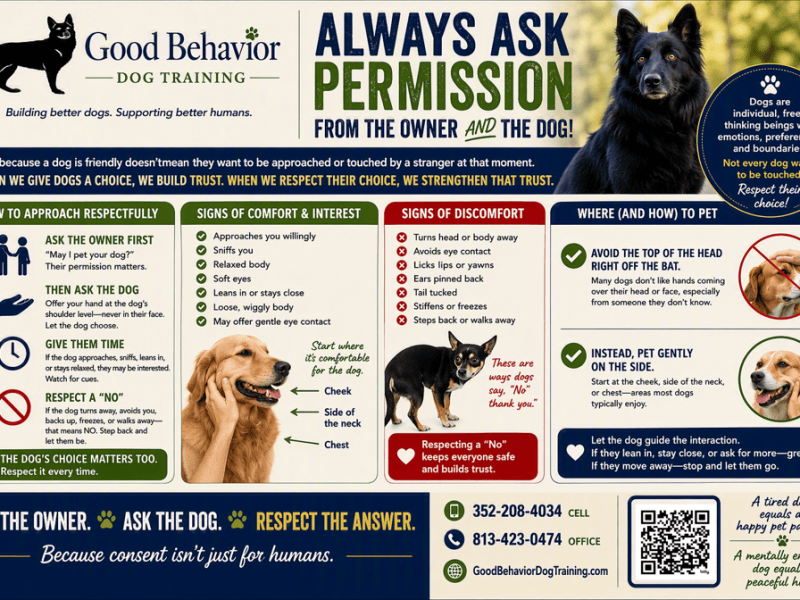
Always Ask Permission from the Owner AND the Dog | Good Behavior Dog Training
Why Asking the Dog Matters: Understanding Canine Consent and Respectful Greetings Most people know they should ask the owner before petting a dog. Unfortunately, that’s often where the conversation ends. An owner may say, “Sure, go ahead, he’s friendly!” and within seconds a stranger reaches over the dog’s head, pats them, hugs them, or invades…
Coming Soon: Faith, Fitness & Fido™
Faith for the Soul. Fitness for the Body. Training for the Dog. By Good Behavior Dog Training At Good Behavior Dog Training, we have always believed that a well-trained dog is about more than obedience. It is about building stronger relationships, creating confident dogs, and helping families enjoy life together. Now, we are excited to…



 Good Behavior Dog Training
Leave a comment