
The Good Behavior Gazette
A Lifetime of Learning, Shared With You
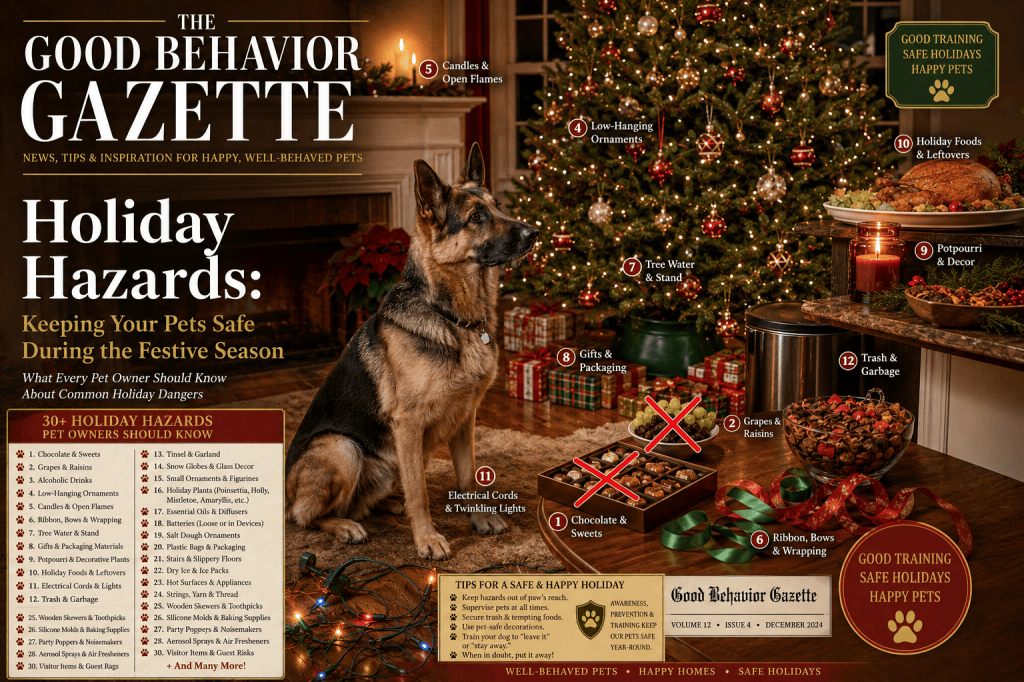
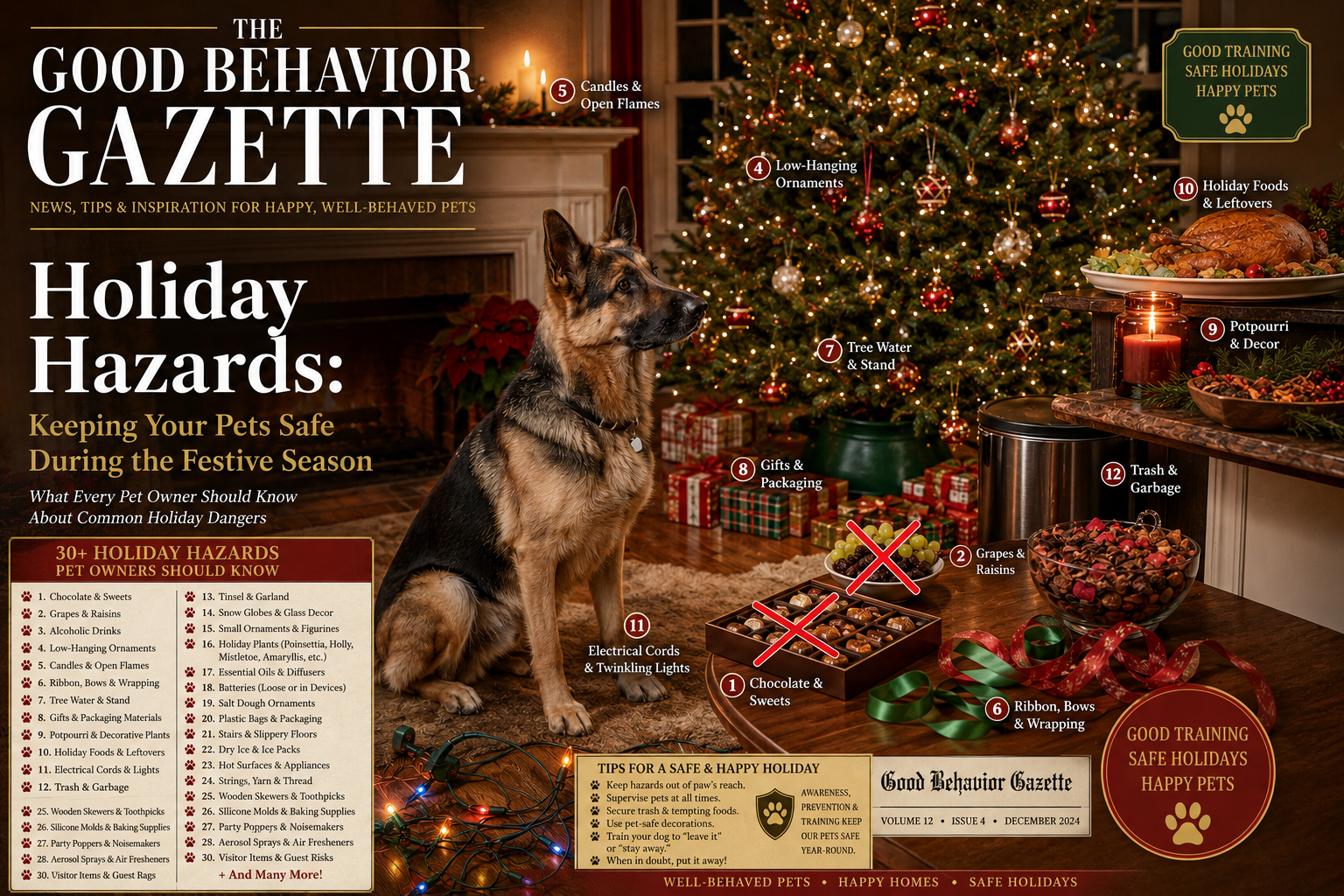
The holiday season is a time of celebration, family gatherings, festive decorations, delicious meals, and making memories with those we love. Unfortunately, it can also be one of the busiest times of year for veterinary emergency clinics.
As families prepare for holiday meals, decorate their homes, exchange gifts, and welcome visitors, many pet owners unknowingly create opportunities for accidents and emergencies. Dogs and cats are naturally curious. New smells, unfamiliar foods, colorful decorations, and bustling activity can quickly turn a festive environment into a dangerous one.
Keeping our homes safe for pets requires ongoing awareness, attention to detail, and a healthy dose of common sense. While no list can include every possible hazard, understanding some of the most common holiday dangers can help prevent an unexpected trip to the veterinarian.
If you suspect your pet has ingested something potentially harmful, contact your veterinarian immediately or reach out to the ASPCA Animal Poison Control Center at 888-426-4435 (888-4ANI-HELP). In many emergencies, time is critical and prompt action can save a life.
Holiday Foods That Can Cause Big Problems
The holiday table often contains tempting foods that can be harmful to pets. While sharing a small treat may seem harmless, many common holiday foods can cause serious illness.
Turkey or roast beef may not be dangerous by themselves, but meat-soaked strings used during cooking can create significant problems if swallowed. These strings may become tangled within the digestive system and can potentially require surgical intervention.
Poultry bones present another concern. Unlike recreational chewing bones specifically designed for dogs, cooked poultry bones are fragile and prone to splintering. These splinters can cause injuries to the mouth, throat, stomach, or intestines.
Rich gravies and fatty foods are also frequent culprits. The high fat content can contribute to stomach upset and, in some cases, pancreatitis, a painful and potentially serious condition. Many gravies also contain onions, garlic, or other seasonings that can be toxic to dogs.
Garlic, onions, chives, and leeks deserve special attention. These ingredients can damage red blood cells and may lead to a potentially life-threatening anemia. Unfortunately, they are commonly found in holiday recipes.
Certain fruits and nuts can also create problems. Grapes and raisins have been linked to kidney damage in dogs, while macadamia nuts may cause weakness, digestive upset, and other adverse reactions.
Holiday baking introduces additional concerns. Uncooked yeast dough may continue to rise inside the stomach, causing dangerous expansion and potentially leading to rupture. Chocolate remains one of the most well-known holiday hazards due to the presence of theobromine, which can affect the cardiovascular, nervous, and digestive systems.
Many people are surprised to learn that caffeine products can be just as dangerous. Coffee, tea, energy drinks, and other caffeinated products contain compounds that may negatively affect the heart, nervous system, and urinary system.
One of the most dangerous substances found in many modern products is xylitol. This artificial sweetener is commonly found in sugar-free gum, candies, baked goods, peanut butter products, and other items. Even small amounts can be extremely toxic to dogs.
Alcohol, tobacco products, nicotine devices, and discarded food containers should also be kept securely out of reach.
Perhaps one of the greatest dangers is the garbage can itself. Leftover food scraps, bones, wrappers, and discarded cooking materials often collect there, creating a tempting buffet for curious pets.
Holiday Plants and Decorations
Many traditional holiday plants may cause stomach upset if ingested.
Holly, mistletoe, poinsettias, Christmas cactus plants, and the needles from evergreen trees can all contribute to digestive discomfort. While some may cause only mild symptoms, others can create more serious concerns depending on the amount ingested.
Decorative items can be even more dangerous than the plants themselves.
Ribbon, yarn, string, and gift wrap accessories are particularly attractive to many pets. Unfortunately, these items can cause intestinal obstruction or “bunching” of the intestines if swallowed.
Potpourri products often contain concentrated oils that may be harmful to pets. Candles present obvious burn and fire hazards, while fireplaces create risks from intense heat and flying sparks.
Tinsel deserves special mention. It may look harmless, but it can become a serious choking hazard or intestinal obstruction if consumed.
Low-hanging ornaments are another common temptation. Some ornaments are made of glass and can shatter into sharp pieces. Others contain materials that may be toxic if ingested.
Christmas lights, extension cords, and electrical decorations can present risks of strangulation, burns, or electrocution.
Even edible decorations such as popcorn garlands, candy canes, gingerbread ornaments, and homemade treats may lead to digestive problems.
Hidden Dangers Under the Tree
Many gifts contain items that are perfectly safe for humans but potentially dangerous for pets.
Batteries can leak corrosive materials if chewed. Perfumes, colognes, aftershaves, and essential oils may be toxic if ingested or spilled onto pets.
Gift ribbons and bows are often irresistible to curious animals. While they may appear harmless, they can create significant choking hazards and intestinal blockages.
Before placing presents beneath the tree, consider whether the contents would remain safe if a dog or cat decided to investigate.
The Christmas Tree Itself
The holiday tree often becomes the centerpiece of the home, but it can also become the centerpiece of a veterinary emergency.
Artificial snow products may be mildly toxic and can cause digestive upset. Larger quantities may lead to intestinal blockage.
Ornaments create risks of cuts, choking, and ingestion. Curious pets may bat, chew, or swallow pieces without understanding the consequences.
Tree water is a frequently overlooked hazard. Over time, fertilizers, preservatives, insecticides, sap, and bacteria can accumulate in the water reservoir. A curious pet drinking from the tree stand may inadvertently consume harmful substances.
Using a tree skirt or other barrier can help reduce access and minimize temptation.
Prevention Is Always Easier Than Treatment
One of the most effective ways to prevent holiday accidents is by providing appropriate outlets for your pet’s energy and curiosity.
Well-exercised and mentally enriched dogs are often less interested in inventing their own holiday entertainment. Training sessions, enrichment activities, food puzzles, walks, and supervised chew toys can help direct attention toward productive activities and away from potential hazards.
As I often remind clients:
“A tired dog equals a happy pet parent, but a mentally enriched dog equals a peaceful home.”
The holidays should be a time of joy for every member of the family, including our pets. By remaining aware of common hazards and taking simple preventative steps, we can help ensure that our celebrations remain safe, happy, and memorable for everyone.
Happy Holidays from Good Behavior Dog Training
Building Better Relationships Between Dogs and Their Humans Since 1979 🐾🎄
 Good Behavior Dog Training
Leave a comment