Building a better relationship with your dog starts with communication, trust, and understanding.
Always Ask Permission from the Owner AND the Dog!
Why, you ask?
Because dogs are not objects for our enjoyment. They are individual, free-thinking beings with emotions, preferences, boundaries, and personal space just like we do. Just because a dog is friendly does not mean that dog is in the mood to be approached, touched, hugged, or petted by a stranger at that particular moment.
Whenever I ask someone, “May I pet your dog?” and they say, “Yes,” that’s only the first step. The owner’s permission matters, but so does the dog’s.
After receiving the owner’s permission, I ask the dog.
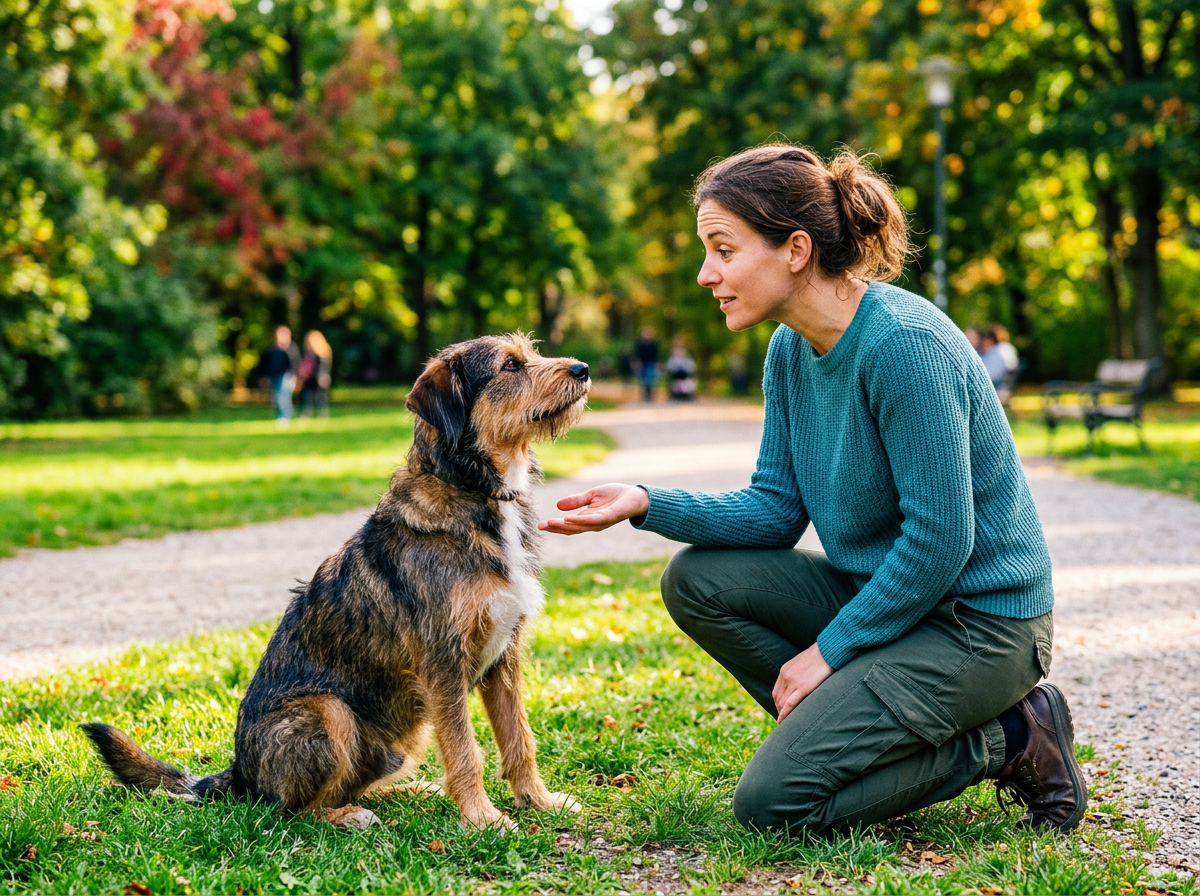
How do I do that? I calmly stand to the side and allow the dog the opportunity to choose. I might offer my hand at a comfortable distance, never pushing it into the dog’s face or reaching toward them. Then I wait. The dog gets to decide whether they want to interact.
If the dog approaches, sniffs, remains relaxed, or leans in, that is often a sign they may be interested in social interaction. Even then, I give them a few moments and continue to observe their body language.
But if the dog turns away, avoids eye contact, backs up, walks away, freezes, or otherwise disengages, I take that as a clear “No, thank you.”
And I respect it.
It doesn’t matter if the owner says, “Oh, he’s friendly!” or “She loves everybody!” The dog’s opinion matters too. A dog that chooses not to interact should have that choice honored without pressure.
Too often, people assume that because a dog isn’t growling or barking, they are comfortable. In reality, many dogs communicate discomfort in subtle ways long before they feel the need to escalate. Looking away, licking their lips, yawning, turning their head, moving away, or becoming still can all be ways of saying, “I’m not comfortable.”
When a dog does choose to engage, I avoid reaching over the top of their head. Contrary to popular belief, many dogs do not enjoy a stranger immediately patting them on the head. Imagine having someone you’ve never met reach over your face and touch the top of your head. It can feel intimidating and invasive.
Instead, I start by gently petting the side of the neck, the cheek area, or the chest, allowing the dog to remain in control of the interaction. If they continue to lean in, stay close, or seek more contact, great! If they move away, I respect that choice and stop.
Giving dogs a voice in the interaction helps build trust, reduces stress, and teaches people to recognize and respect canine communication. Consent isn’t just for humans. While dogs can’t speak our language, they are constantly communicating their comfort levels through their body language.
So please, remember:
✅ Ask the owner. ✅ Ask the dog. ✅ Respect the answer from both.
A dog that chooses to interact is far more likely to have a positive experience than a dog who feels forced into one.
Not every dog wants to be touched. Not every dog wants to say hello. And that’s okay. Respecting a dog’s boundaries is one of the kindest things we can do for them.
“When we give dogs a choice, we build trust. When we respect their choice, we strengthen that trust.” 🐾
“Come give Sara a hug goodbye,” my friend tells her 3-year-old son. His eyes get big, and he stands behind his mother, hugging her legs. It’s an uncomfortable moment. My friend is embarrassed that her son clearly doesn’t want to hug me. She wants to teach him manners, and worries how his reaction reflects on her parenting. It’s been so long since we last saw each other that her son barely remembers me, and he’s very uncomfortable with the idea of such an intimate goodbye. I’m also not a fan of the idea, since I don’t want to touch anyone, no matter the age, without his or her express consent, even for something as minor as a brief embrace.
“Do you want to wave goodbye instead?” I ask my friend’s son. He nods and smiles shyly, waving bye-bye. The tension in the room relaxes, and I hug my friend goodbye…


 Good Behavior Dog Training
Leave a comment